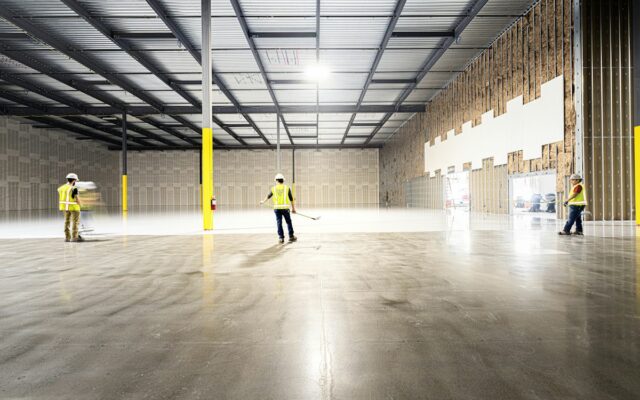
Kenya’s push to industrialise beyond Nairobi and Mombasa has produced a new option for manufacturers scouting a plant site: the county aggregation and industrial park, usually shortened to CAIP. These are county-level facilities built jointly by a county government and the national government, and they are legally and commercially distinct from the Special Economic Zones (SEZ) and Export Processing Zones (EPZ) regime this site has covered elsewhere. Choosing between a CAIP plot and an SEZ or EPZ plot means choosing between two different legal frameworks and two very different incentive packages. This guide covers what a CAIP is, how land and lease terms are typically structured, what county incentives look like, and the due diligence to complete before signing anything.
County Aggregation and Industrial Parks: How They Differ from SEZs and EPZs
The CAIP programme is run by the State Department for Industry within the Ministry of Investments, Trade and Industry, with the Council of Governors, county governments and technical support from UNIDO. Per the Ministry’s own published material, the objective is to grow manufacturing and agro-industrial investment and raise agricultural competitiveness by giving processors a place to aggregate, sort, grade, cool, package and process produce near where it is grown. Each park typically combines an aggregation centre (cold storage, sorting and packing) with an industrial section offering common-user processing infrastructure and serviced plots for lease.
Funding is shared: the Ministry’s briefing materials record a national allocation of roughly Ksh 4.6 billion for the 2023/2024 financial year, with each participating county contributing Ksh 250 million matched by Ksh 250 million from national government, per park. Rollout has proceeded in phases across the 47 counties, and government sources report that dozens of counties have met minimum criteria, with several parks at groundbreaking or construction stage. The count fully operational at any time changes as construction progresses, so treat any specific figure as provisional and confirm current status with the county industrialisation office.
This matters because a CAIP is not a special economic zone. An SEZ or EPZ is declared under the Special Economic Zones Act, 2015 (Act No. 16 of 2015) and sits on public land that, once gazetted, cannot be alienated except to SEZ developers, operators or enterprises under section 4(5). Enterprises inside a gazetted SEZ or EPZ get a statutory tax package under section 35: exemption from stamp duty, plus, per figures published by Kenya’s national investment promotion agency, reduced corporate tax for an initial period (broadly 0 percent for ten years for EPZ enterprises and 10 percent for ten years for SEZ enterprises, stepping up thereafter), and VAT and customs duty relief on qualifying imports. A CAIP plot carries none of this automatically, and is taxed like any other domestic manufacturer unless the site also happens to be gazetted as an SEZ. Confirm in writing, from the county and the Special Economic Zones Authority, which the plot on offer actually is.
Land and Lease Terms for Manufacturers in a County Industrial Park
Because CAIP land is public land, allocation follows the general framework in the Land Act, 2012. Section 12 allows the National Land Commission, at the request of national or county government, to set aside public land for investment purposes, subject to the investment benefiting local communities, and section 9(3) requires any substantial conversion of public land to private use to be approved by the National Assembly or county assembly. A manufacturer is not buying freehold title over a CAIP plot; it is granted a leasehold interest on terms the county sets, not negotiated from a blank page.
The most detailed published example comes from Kirinyaga County’s Sagana Industrial City, a roughly 242 acre site for which the county published an investor call and application pack. Investors could apply for industrial plots on leases of 21, 60 or 90 years, depending on the scale of the proposed activity, with the site earmarked for agro-processing and light industry, expressly excluding heavy industry. Applicants had to submit a certificate of incorporation, current CR12 and director particulars, a tax compliance certificate, a business plan for the proposed activity, and proof of funding. Other counties structure allocations differently, so lease length, permitted use, ground rent and reversion terms should be confirmed against that county’s own documentation rather than assumed to mirror Kirinyaga’s. For a foreign-owned applicant, note the constitutional rule that non-citizens may only hold land on leasehold terms, capped at 99 years however granted.
County Government Incentives and Support
Because a CAIP is not a statutory tax incentive zone, the value a county offers is mostly structural rather than fiscal: subsidised ground rent on a long lease, access to shared aggregation and cold-storage infrastructure uneconomic for a single factory to build alone, and site infrastructure (roads, power, water, sewerage, ICT) funded upfront rather than charged to the investor. Some counties also offer expedited plan approval, single-window permit facilitation, or fee waivers for park tenants, set out, if at all, in that county’s own Finance Act, and these vary significantly. Ask the county industrialisation office for its current Finance Act and incentive schedule in writing, rather than assuming another county’s terms apply, or that they match the statutory SEZ/EPZ package above.
Due Diligence Before You Sign: Title, Utilities and County By-laws
Siting a factory on county industrial park land raises the usual Kenyan land due diligence questions, plus a few specific to public land allocations. On title, verify the registered proprietor and the exact instrument on offer: a registered lease, an allotment letter pending a formal lease, or a licence to occupy pending survey and subdivision. Allotment letters are common at early CAIP stages and are not the same as a registered leasehold interest; avoid committing significant capital until the lease is executed and, ideally, registered. The site should also be checked for overlapping claims or pending compulsory acquisition disputes, matters within the Environment and Land Court’s jurisdiction if litigation follows.
On utilities, published capacity for power, water and effluent disposal at application stage (Kirinyaga’s pack listed power, water, sewerage and waste management as available) should be verified against the specific plot, not the park as a whole, since early CAIP phases often have infrastructure concentrated near the aggregation centre while connections to outer plots are still being extended. Ask the utility provider for written confirmation of capacity, connection cost and timeline before finalising a lease.
Finally, county by-laws (county legislation passed under Article 185 of the Constitution and the County Governments Act, 2012) govern trade licensing, land use and zoning, waste management, and county levies that sit on top of national law, and vary between counties. Before committing, obtain the county’s current Finance Act, any applicable zoning regulations, and written confirmation of which licences (single business permit, National Environment Management Authority licence, water permit, fire and public health approvals) are needed to lawfully commission the factory.
How We Can Help
Clay & Associates Advocates advises manufacturers on the full legal path to siting a plant in Kenya: confirming whether a site is a CAIP allocation, a gazetted SEZ, or neither, negotiating county lease and allotment documentation, conducting title due diligence, and advising on the by-laws, permits and licences that apply once construction begins. Our Real Estate practice handles title due diligence, lease negotiation and government lease matters of exactly this kind, working alongside our regulatory team on a factory’s licensing and compliance obligations.
Sources: Ministry of Investments, Trade and Industry, County Aggregation and Industrial Park (CAIPs); Ministry of Investments, Trade and Industry, County Aggregation and Industrial Parks: Economic Facts and Figures; County Government of Kirinyaga, Sagana Industrial City investor application pack; Special Economic Zones Act, 2015 (Kenya Law); Land Act, 2012 (Kenya Law); County Governments Act, 2012 (Kenya Law); Kenya Investment Authority, Incentives.
Frequently asked questions
Is a county aggregation and industrial park the same as a Special Economic Zone?
No. A CAIP is a county-level industrial infrastructure programme on ordinary public land. An SEZ or EPZ is a zone specifically declared and gazetted under the Special Economic Zones Act, 2015, carrying its own statutory tax and customs incentive package. A plot can be one, the other, both, or neither, and this should be confirmed in writing before committing to a site.
What kind of legal interest does a manufacturer get over a CAIP plot?
Typically a leasehold interest granted by the county, not freehold title. Lease length varies by county; Kirinyaga’s Sagana Industrial City has offered terms of 21, 60 or 90 years depending on the scale of the activity. Early-stage offers are often an allotment letter rather than a registered lease, and that distinction matters before significant capital is committed.
Are tax holidays available to a manufacturer setting up in a CAIP?
Not automatically. The statutory corporate tax and duty incentives associated with Kenyan investment zones apply inside a gazetted SEZ or EPZ, not to CAIP tenants generally, who are taxed like any other domestic manufacturer unless the site is also gazetted as an SEZ.
What should be checked before signing a CAIP lease?
At minimum, the registered title and exact instrument on offer, whether utility capacity is actually connected to the specific plot rather than the wider park, the county’s current Finance Act and applicable levies, and the licences needed from the county and national regulators before the factory can lawfully operate.