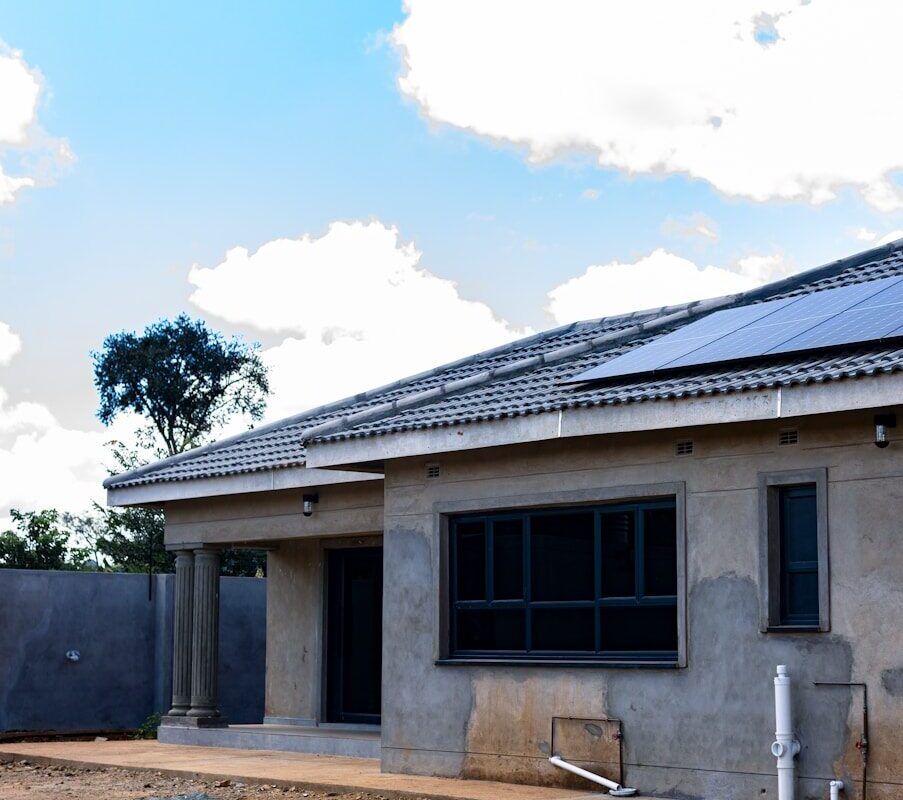
Solar Equipment Import Tax Kenya is a question we field often from clients, and this article sets out the practical answer.
Businesses new to the Kenyan market often ask about obtaining an “import licence” for solar panels, inverters or lithium batteries. Kenya does not operate a general import or export licence system for most goods. What actually applies is a set of product-specific compliance steps: quality certification through the Kenya Bureau of Standards (KEBS), customs documentation through the Kenya Revenue Authority (KRA), and duty, VAT and excise treatment that varies by product and has shifted materially under recent Finance Acts. Getting these right before the goods are shipped, not after they arrive at Mombasa, is what determines whether a consignment clears quickly or sits under destination inspection.
Solar Equipment Import Tax Kenya: The Practical Requirements
The sections below walk through what this involves in practice. The primary legal texts and regulator guidance sit at www.kra.go.ke, and the rest of this article works through the detail.
KEBS Pre-Export Verification of Conformity
Solar panels, inverters and related electrical equipment fall under KEBS’s Pre-Export Verification of Conformity (PVoC) programme. The programme itself dates to Legal Notice No. 78 of 15 July 2005, but that instrument has since been superseded twice, by Legal Notice No. 127 of 2018 and then Legal Notice No. 183 of 2019, before being replaced by the current Legal Notice No. 78 of 2020, which remains the operative instrument, as amended since. The programme requires goods in scope to be inspected and tested for compliance with the applicable Kenya Standard in the country of export, before shipment, rather than only on arrival. A KEBS-appointed inspection body issues a Certificate of Conformity (CoC) once the goods pass, and this must accompany the shipment.
Where a consignment arrives without a valid CoC, KEBS’s own published guidance sets the destination inspection penalty at 5% of the approved customs value for goods from a country where KEBS has an appointed inspection company, or 0.6% of the customs value, subject to a minimum of USD 300 and a maximum of USD 3,500, where no inspection company has been appointed for that country. Both carry the inspection delay on top of the fee itself.
For solar PV modules specifically, this typically means testing against the relevant Kenya Standard adopted from the IEC framework, covering module design and performance. One genuine uncertainty worth flagging: press reporting in February 2026 described KEBS’s PVoC inspection contracts for general goods as having lapsed, with a shift toward destination-only inspection, while KEBS’s own PVoC manual, updated the following month, still describes the pre-shipment programme as operative. Given that inconsistency, confirm the applicable regime and appointed inspection body directly with KEBS immediately before each shipment, rather than assuming either source.
Certificate of Origin: A Recent Addition
Since 1 July 2025, section 44A of the Tax Procedures Act (Cap. 469B), as amended by the Finance Act, 2025, requires every consignment imported into Kenya to be accompanied by a Certificate of Origin issued by a competent authority in the country of export. This is a separate document from the KEBS Certificate of Conformity and covers a different question, where the goods originated, rather than whether they meet Kenyan standards. Both are now standard requirements for solar equipment shipments and should be arranged together with the exporting supplier before the goods are dispatched.
Correct Tariff Classification
Getting the Harmonised System (HS) classification right matters because Kenya’s duty, VAT and excise treatment of solar equipment is not uniform across product lines, and it is assessed against the East African Community Common External Tariff (EAC CET), not against a supplier’s home-country customs code. A supplier’s own national customs code does not automatically carry over to Kenya’s EAC tariff line. Even where it matches at the six-digit international HS level, as a solar panel code often will, the extra digits some countries append for their own domestic schedule are not part of Kenya’s classification and should not be quoted to a Kenyan clearing agent as if they were. Confirm the correct Kenyan tariff line independently for each product. Solar panels are generally classified under HS heading 8541 (photovoltaic cells and modules), inverters under HS 8504.40, and lithium-ion batteries under HS 8507.60.00. We recommend confirming the specific tariff line for each consignment with a licensed clearing agent or directly with KRA before shipment, since sub-heading treatment can differ by module type, inverter capacity, or battery chemistry.
Duty, VAT and Excise Treatment (Current Position)
Kenya’s tax treatment of renewable energy imports has been a moving target across recent Finance Acts, and figures quoted from a general “solar imports are duty-free” understanding should be checked against the current position rather than assumed to still apply. As at the Finance Act, 2026 (assented 23 June 2026, effective 1 July 2026):
Lithium-ion batteries under HS 8507.60.00 retain a 0% excise duty rate, set under the Finance Act, 2025, and remain zero-rated for VAT, though the zero-rating is now narrowly confined to that specific tariff heading rather than a broader battery category. A proposal in the Finance Bill, 2026 to downgrade this to VAT-exempt status, which would have removed the importer’s ability to reclaim input VAT, was dropped before the Act was passed. This is a materially better position than exempt status and worth confirming has not changed again before pricing a shipment, since Kenyan tax treatment of e-mobility and battery imports has been revisited in each of the last three Finance Bills.
Inverters classified under HS 8504.40 do not currently benefit from a comparable exemption and attract standard EAC CET import duty plus VAT at the standard rate, unless the specific model or use case falls under a separate exemption not covered here.
We would also recommend confirming, before importing lithium batteries specifically, whether the consignment triggers any separate registration requirement with the National Environment Management Authority relating to hazardous substances handling. This sits outside the scope of KEBS and KRA compliance and is assessed separately.
Import Declaration and Clearance
Beyond the certification and classification steps above, standard KRA import procedure applies: an Import Declaration Form (IDF) is filed at 2% of the customs value, and clearance is processed through KRA’s Integrated Customs Management System via a licensed clearing agent. This runs in parallel with, not instead of, the EPRA solar PV licensing requirement covered in our companion guide, which governs who may legally import and sell the goods once they are in the country.
How We Can Help
Clay & Associates Advocates advises importers and distributors of solar equipment on tariff classification, KEBS and customs documentation, and current duty, VAT and excise treatment, alongside the EPRA licensing process. Contact our Regulatory and Compliance practice before your first shipment to confirm the current position on your specific products.
Sources: KEBS Pre-Export Verification of Conformity programme, originally Legal Notice No. 78 of 15 July 2005, currently governed by Legal Notice No. 78 of 2020; Tax Procedures Act (Cap. 469B), section 44A, as amended by the Finance Act, 2026; Finance Act, 2025; Finance Act, 2026; East African Community Common External Tariff.
Frequently asked questions
Is there a general import licence for solar products in Kenya?
No. Kenya does not operate a general import licence regime. Compliance runs through KEBS certification, customs documentation, and the sector-specific EPRA Solar PV licence, not a single overarching permit.
Where is the KEBS Certificate of Conformity obtained?
It is issued by a KEBS-appointed inspection body in the country of export before the goods are shipped, not on arrival in Kenya. The appointed inspection body for a given country can change, so confirm the current appointment before each shipment.
Are lithium-ion batteries taxed differently from other electronics on import?
Currently yes. Batteries under HS 8507.60.00 carry 0% excise duty and remain VAT zero-rated as at the Finance Act, 2026, a more favourable position than the standard treatment applied to most imported electronics, including inverters.
What happens if a shipment arrives without a Certificate of Conformity?
Per KEBS’s published guidance, the consignment is held for destination inspection at a fee of 5% of the customs value if an inspection company is appointed for the country of export, or 0.6% (minimum USD 300, maximum USD 3,500) if none is appointed, in addition to the delay this causes at the port. Given reported disruption to KEBS’s inspection contracts in 2026, confirm the current position before shipping.