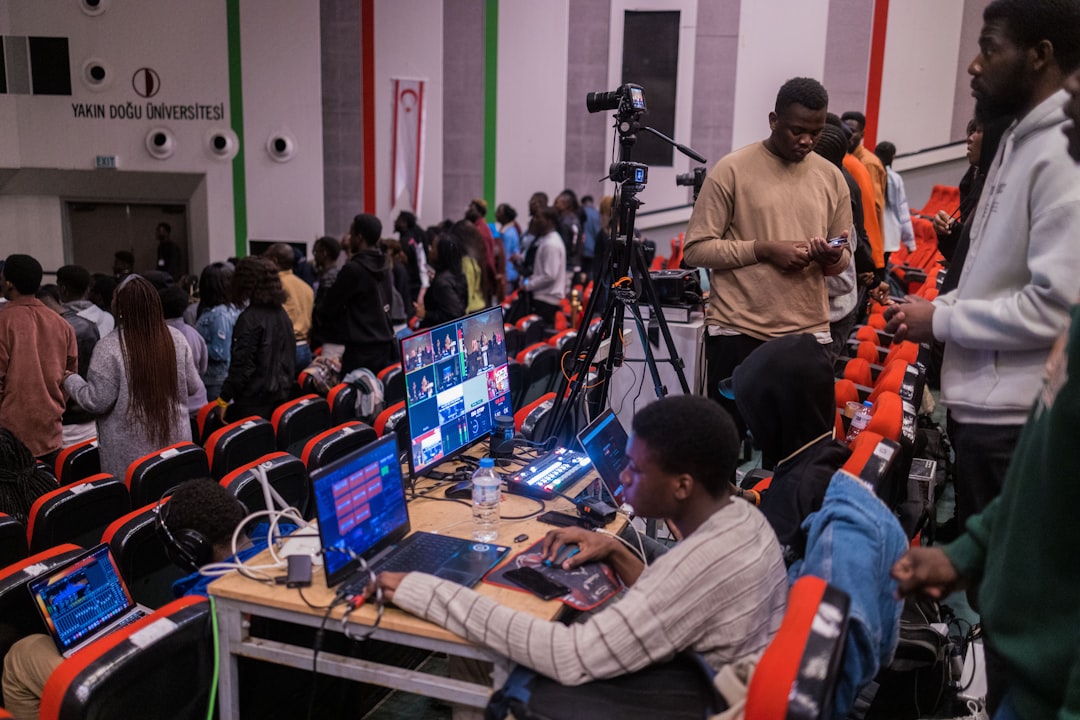
Kenya’s competitive gaming scene has grown quickly enough that its players now expect the same legal protections footballers and athletes take for granted: a forum to challenge a federation’s decisions. Whether that forum exists depends on a question the Sports Act, 2013 never answers directly: is esports a “sport” for the purposes of Kenyan sports law, and does the Sports Disputes Tribunal (SDT) have jurisdiction over an esports federation the way it does over a football or athletics body? The Tribunal has already had to confront that question directly, in a dispute between a group of players and the Kenya Professional Esports Federation. This article uses that case to explain how the Sports Act’s registration and dispute-resolution framework applies, or does not apply, to esports.
Why the question is not obvious
The Sports Act, 2013 does not define “sport” by reference to a fixed list of disciplines. It builds its framework around the concept of a “national sports organisation,” registered with the Registrar of Sports under section 46, and around bodies affiliated to a recognised national or international federation for their discipline. Esports sits awkwardly inside that structure. It is organised competitively, with rankings, national qualifiers and international federations of its own, but it does not involve the physical contest that older definitions of “sport” assume, and Kenyan sports administrators have not always treated gaming federations as automatically equivalent to a football, rugby or athletics body. Whether an esports body counts as a national sports organisation entitled to the Sports Act’s registration status, and whether disputes involving it fall within the Sports Disputes Tribunal’s jurisdiction under section 58, therefore had to be tested rather than assumed.
The case: Ouma and others v Kenya Professional Esports Federation
In Ouma & 7 others v Kenya Professional Esports Federation & another (Tribunal Case E012 of 2024) [2024] KESDT 1564 (KLR), decided on 30 April 2024, a group of eight esports players challenged the Kenya Professional Esports Federation’s authority to run national qualifier events, arguing that the Federation had not been properly registered as a sports organisation under the Sports Act. The claimants were, in effect, asking the Tribunal to find that a body organising esports competitions in Kenya could not lawfully do so, and could not be treated as a national sports organisation for Sports Act purposes, without formal registration in place.
The Tribunal did not accept that argument as a basis to stop the qualifiers. It confirmed its own jurisdiction to hear the dispute at all, holding that “the jurisdiction of this Tribunal stems from section 58 of the Sports Act,” the same provision that gives the SDT authority over appeals against national sports organisations’ decisions and other sports-related disputes the parties agree to refer to it. In other words, the Tribunal treated a dispute involving an esports federation as a sports dispute like any other, falling within its ordinary jurisdiction, rather than as something outside the Sports Act framework because the underlying activity was gaming rather than a traditional sport.
On the registration point, the Tribunal noted that the Federation was already affiliated to the International Esports Federation, one of the factors the Sports Act itself treats as relevant: section 46(3) requires an applicant for registration as a national sports organisation to specify, among other things, its national and international affiliations. The Tribunal treated that international affiliation, alongside the Federation’s ongoing operations, as relevant context weighing against the players’ argument that the Federation had no legitimate standing to run the qualifiers, and it dismissed the players’ application, allowing the national selection process to continue. The Tribunal was careful to frame its decision around athletes’ interests rather than around the Federation’s institutional status alone, observing that “athletes’ rights remain at the centre of sports governance” and finding no evidence that the claimants had actually been prevented from participating.
What the ruling establishes, and what it leaves open
The practical effect of the decision is that the SDT does not treat esports as categorically outside the Sports Act’s dispute-resolution machinery. A federation running competitive esports in Kenya, and the players and officials involved in it, can bring a dispute to the Tribunal under section 58 in the same way a football or athletics body could, at least where the dispute concerns the sort of question, a federation’s authority to run a competition, that section 58 contemplates. The decision does not, however, settle every question about esports’ status under the Act. It does not squarely decide whether the Kenya Professional Esports Federation is, or must be, formally registered as a national sports organisation, nor does it work through in detail what registration status would mean for the Federation’s authority going forward. Those questions remain open for a future dispute to resolve more directly, and an esports body that has not completed formal registration under section 46 should not read this decision as confirmation that registration does not matter; it should read it as confirmation that the Tribunal will hear disputes about that very question when they arise.
What this means for esports federations and players in Kenya
For an esports federation, the sensible response is to treat registration as a national sports organisation, and the accompanying disclosure of governance, funding and affiliation information the Sports Act requires, as worth completing properly rather than leaving as an open question a future Tribunal case might test again. For players and clubs, the case confirms there is a real forum, the SDT, willing to hear grievances against an esports federation’s conduct, rather than leaving competitive gamers to rely solely on a federation’s own internal rules with no external check. Either side of a future esports dispute should expect the Tribunal to approach it as a sports dispute governed by the ordinary Sports Act framework, including its rules on registration, affiliation and internal exhaustion of remedies, rather than as a novel category requiring separate legal treatment.
How We Can Help
Clay & Associates Advocates advises esports federations, players and organisers on registration under the Sports Act, governance structuring and disputes before the Sports Disputes Tribunal. Our guide to registering a sports organisation in Kenya covers the registration process an esports federation should not leave untested, and our overview of sports disputes in Kenya sets out how the Tribunal’s process works more generally. Contact our Sports practice if your organisation is involved in, or considering, a dispute before the SDT.
Sources: Ouma & 7 others v Kenya Professional Esports Federation & another (Tribunal Case E012 of 2024) [2024] KESDT 1564 (KLR) (30 April 2024); Sports Act, 2013, sections 46 and 58.
Frequently asked questions
Is esports officially recognised as a sport in Kenya?
There is no single statutory declaration listing esports as a recognised sport. What the Ouma decision shows is that the Sports Disputes Tribunal is willing to treat disputes involving an esports federation as sports disputes falling within its section 58 jurisdiction, which functions as recognition in practice even without a specific legislative statement.
Does an esports federation need to register under the Sports Act?
The Act’s registration framework under section 46 applies to national sports organisations generally, and nothing in the Ouma decision suggests esports bodies are exempt. A federation that wants certainty over its authority to run competitions and discipline members should pursue registration rather than rely on an unresolved question.
Can an esports player bring a dispute to the SDT?
Yes, in principle. The Tribunal in Ouma accepted jurisdiction over a dispute brought by players against an esports federation, applying section 58 of the Sports Act in the same way it would to a dispute involving a more traditional sports body.
What should an international esports affiliation be used for?
Affiliation to a body such as the International Esports Federation is one of the disclosures the Sports Act expects a national sports organisation to make on registration, and the Tribunal in Ouma treated an existing international affiliation as relevant context. It supports a federation’s standing but does not substitute for completing domestic registration.