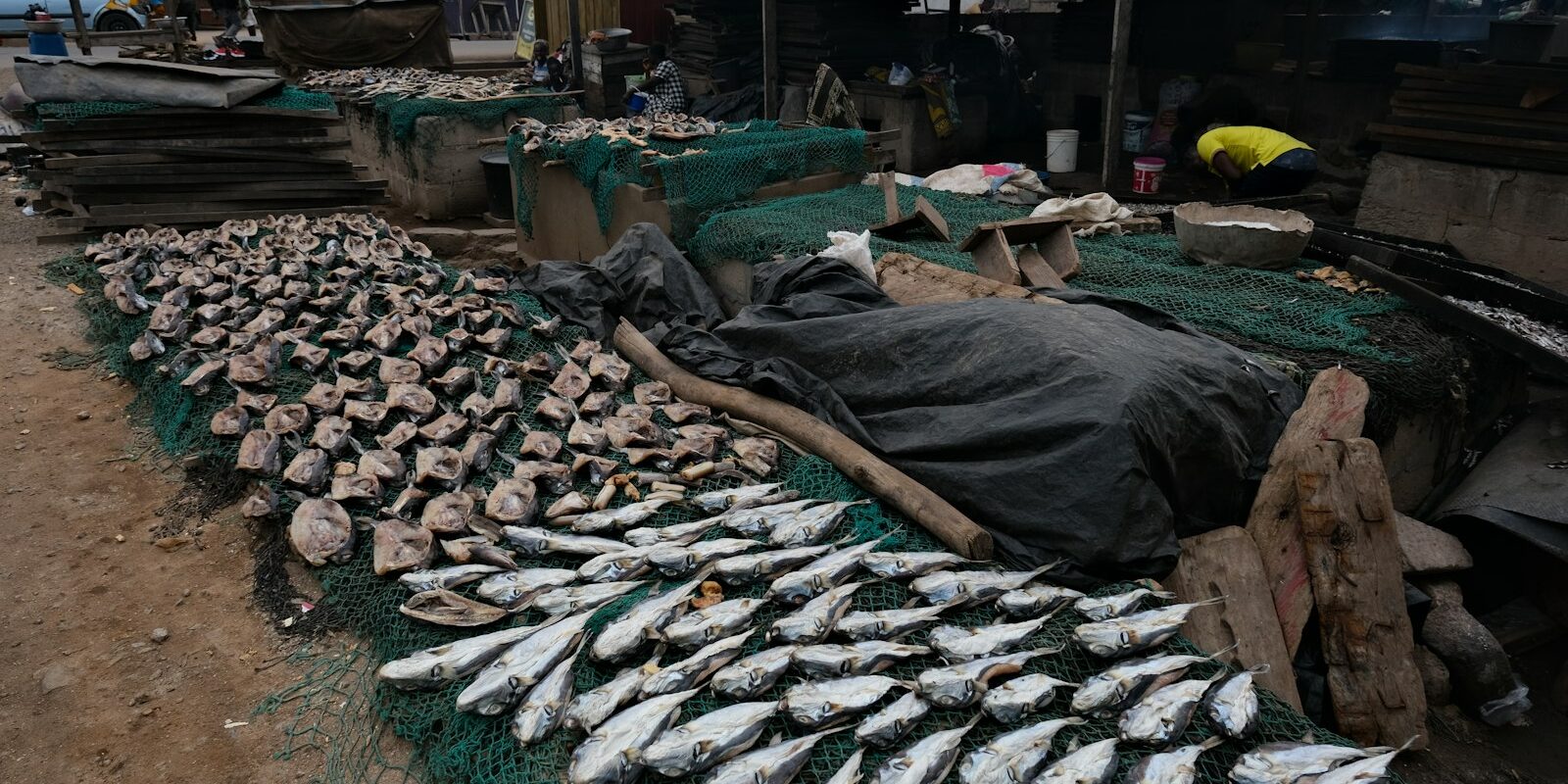
Kenya’s fisheries sector, anchored by Lake Victoria and the Indian Ocean coastline, exports fish and fishery products to the European Union, the Middle East, and regional markets. Getting a consignment of Nile perch fillets, tilapia, or Indian Ocean tuna onto an export flight or vessel is not simply a matter of finding a buyer. It requires a licensed processing or export establishment, product-specific certification confirming the fish is safe for human consumption, and compliance with the importing market’s own sanitary rules, which for the European Union means the establishment itself must be individually approved before a single consignment can move. Exporters who treat this as paperwork to sort out once production is running routinely find their fish held at the border or refused entry. This article sets out the licensing and compliance framework that governs fish export from Kenya, from the Fisheries Management and Development Act, 2016 through to the specific requirements that apply when the destination is the EU.
The legal framework: the Fisheries Management and Development Act, 2016
The principal statute is the Fisheries Management and Development Act, 2016 (No. 35 of 2016), which established the Kenya Fisheries Service as the body responsible for conservation, management, and development of Kenya’s fisheries resources. The Act defines “export” broadly as sending or taking fish out of Kenya, and defines a “fish processing establishment” as any place, other than a licensed fishing vessel, where fish are canned, dried, gutted, salted, iced, chilled, frozen, smoked, or otherwise processed or stored, excluding restaurants and retail points preparing fish for immediate consumption. It prohibits export of live fish without a valid licence, prohibits the sale or export of adulterated or contaminated fish outright, and gives the Director-General power to inspect and seize fish destined for import or export. Most importantly for a commercial exporter, it prohibits engaging in fishing-related activities, which includes processing and export, without a valid licence or authorisation, and contravention is an offence attracting a fine, imprisonment, or both, as prescribed. Detailed certification mechanics are left to subsidiary regulations, principally the Fisheries (Safety of Fish, Fishery Products and Fish Feed) Regulations, 2007.
Licensing fish processing and export establishments
The Kenya Fisheries Service (KeFS), the state agency now performing the licensing and regulatory functions once housed in the State Department for Fisheries, is the body an exporter deals with directly. Under the Act, the Director-General may issue a fish processing licence subject to conditions covering the establishment’s location, the type of fish processed, processing methods, hygiene standards, waste management, and record-keeping; the licence is valid for a defined period, renewal must be lodged well before expiry, and the Director-General may suspend or cancel it for non-compliance. In practice, KeFS operates distinct categories including the Fishery Enterprise Licence, the Fish Processing Licence, Domestic and Foreign Craft Licences for vessels, the Aquaculture Facility Licence, and trader- and mover-specific licences. An enterprise intending to operate a land-based processing and export facility must submit a letter of intent to the Office of the Director-General describing the business, target species, processing methods, capacity, and intended markets, after which KeFS inspects the proposed facility, conducts a verification and approval inspection, and inspects again once processing begins on a trial basis, before issuing the fish processing licence and the certificate of compliance needed to export.
Health certification and sanitary requirements for export
Licensing the establishment is only the first step; every consignment also needs product-level certification. The 2007 Safety Regulations require export-oriented fishery enterprises to hold a certificate of compliance per product line, issued after inspection and renewed annually or whenever processing methods or raw material sources change, and they set detailed design and hygiene requirements for processing premises. The competent authority under these regulations, exercised through KeFS’s Directorate of Fish Quality, Safety and Trade, issues the health certificate accompanying each consignment, following inspection of that batch and certification of its production, processing, storage, and fitness for its intended use. Documentary requirements differ by product form: for processed fish (smoked, dried, chilled, or frozen), KeFS requires the fish processing licence, the certificate of registration of the fishing vessel that caught the raw material, the certificate of compliance, and the fish health certificate; for live fish, a certificate of compliance and export permit issued by KeFS, plus a fish health certificate. Notably, for live fish the health certificate is issued not by KeFS but by the Directorate of Veterinary Services, since live-animal health certification sits with the veterinary authorities rather than the fisheries food-safety regulator, so an exporter handling both product lines deals with both bodies. A food hygiene licence from Port Health Services or the relevant county health department, and registration on the Kenya Trade Network Agency’s electronic single-window platform, are also required.
The EU market: the competent authority and approved establishments
Exporting to the European Union carries an additional layer of compliance. Under EU rules on food of animal origin, fish and fishery products may only enter the Union from third countries listed as authorised, and, critically, from individual establishments within that country separately approved and entered on the EU’s own establishment list. Kenya is listed as an authorised third country for fishery products under Commission Implementing Regulation (EU) 2021/405, which consolidates the lists of third countries permitted to send animal-origin goods into the EU. That country-level listing does not itself authorise every Kenyan processor; it means the EU accepts that KeFS, as Kenya’s competent authority, provides adequate guarantees, so that establishments KeFS has inspected and approved can then be added to the EU’s own list of authorised non-EU establishments. Reaching the EU market therefore requires the standard Kenyan certificate of compliance and health certificate, plus confirmation that the specific establishment is on the EU’s current published list, which changes as establishments are added, suspended, or removed. Exporters targeting the EU should treat that listing as a distinct compliance workstream from ordinary KeFS licensing, not an automatic consequence of it.
KEBS standards, export documentation, and Lake Victoria considerations
The Kenya Bureau of Standards (KEBS) develops the Kenya Standards setting quality and safety specifications for goods produced in Kenya, including food products, through its Food and Agriculture Department; these standards inform the parameters fisheries inspectors apply when certifying consignments. Exporters also deal with the Kenya Export Promotion and Branding Agency (KEPROBA), formed from the 2018 merger of the former Export Promotion Council and the Brand Kenya Board, which guides exporters on procedure and administers the “Grown in Kenya” branding mark. Certificates of origin, required alongside fisheries-specific certification, depend on destination: the Kenya Revenue Authority issues preferential certificates such as COMESA, EAC, EUR.1 (for the EU), GSP, AfCFTA, and AGOA certificates, while the Kenya National Chamber of Commerce and Industry issues ordinary certificates of origin.
Lake Victoria’s Nile perch trade shows why the framework matters: Kenyan Nile perch exports to the EU were suspended for several years between 1997 and 2000 after food-safety concerns over hygiene at landing sites and processing plants, at a time when the regulatory and infrastructure framework had not kept pace with the trade’s growth, and several plants that could not afford to upgrade closed permanently. That history is a direct reason the current framework emphasises establishment-level approval and landing-site hygiene rather than treating export as a matter for the processing plant alone; an exporter sourcing from multiple landing sites should build supplier-level hygiene verification into its own compliance programme.
How We Can Help
Clay & Associates Advocates advises fish processors, exporters, and investors on the licensing and compliance issues involved in bringing a fisheries business to export readiness, from structuring the licensed entity and negotiating supply arrangements with landing sites, to liaising with the Kenya Fisheries Service on establishment approval and preparing for EU market-access requirements. We also advise on the regulatory risk of non-compliance, including licence suspension, seizure of consignments, and the commercial consequences of losing approved-establishment status in a key export market. Contact our Regulatory Compliance team to discuss licensing your processing or export facility, or our Corporate & Commercial team for advice on structuring or investing in a fish export business. If you are sourcing fish from your own farmed stock rather than wild capture, see our companion guide on setting up an aquaculture business in Kenya.
Sources: Fisheries Management and Development Act, 2016 (No. 35 of 2016), sections 2, 9, 30, 55, 60, 67, 112, 113 and 124, text via Kenya’s National CHM portal; Fisheries (Safety of Fish, Fishery Products and Fish Feed) Regulations, 2007 (L.N. 170/2007), text via FAOLEX; Kenya Fisheries Service, Import/Export requirements; Kenya Fisheries Service, Licensing; Commission Implementing Regulation (EU) 2021/405, EUR-Lex; Kenya Bureau of Standards, About Our Standards; Kenya Export Promotion and Branding Agency, exporter guidance; on the 1997 to 2000 EU suspension of Kenyan Nile perch exports, World Bank Policy Research Working Paper 3349, “Kenyan Exports of Nile Perch”.
Frequently asked questions
Which body licenses a fish processing and export business in Kenya?
The Kenya Fisheries Service, established under the Fisheries Management and Development Act, 2016, licenses fish processing establishments and export-oriented fishery enterprises. The Director-General issues the fish processing licence after an inspection process, and also issues the certificate of compliance and export permits accompanying individual consignments.
Who issues the fish health certificate for an export consignment?
For processed fish, the health certificate is issued by the Kenya Fisheries Service through its Directorate of Fish Quality, Safety and Trade, following inspection of the specific batch. For live fish exports, it is instead issued by the Directorate of Veterinary Services, while KeFS issues the accompanying certificate of compliance and export permit.
Does a Kenya Fisheries Service licence automatically allow export to the EU?
No. Kenya is listed as an authorised third country for fishery products under EU law, but EU rules also require the specific exporting establishment to be individually approved and entered on the EU’s own list of authorised non-EU establishments. An exporter should confirm its establishment’s current status on that list directly, since it can change.
What happens if an establishment exports without the required licences or certificates?
Engaging in fishing-related activities, including processing and export, without a valid licence or authorisation is an offence under the Fisheries Management and Development Act, 2016, and the Director-General has power to inspect and seize fish destined for export. Exporting adulterated or contaminated fish is separately prohibited outright, independent of licensing status.