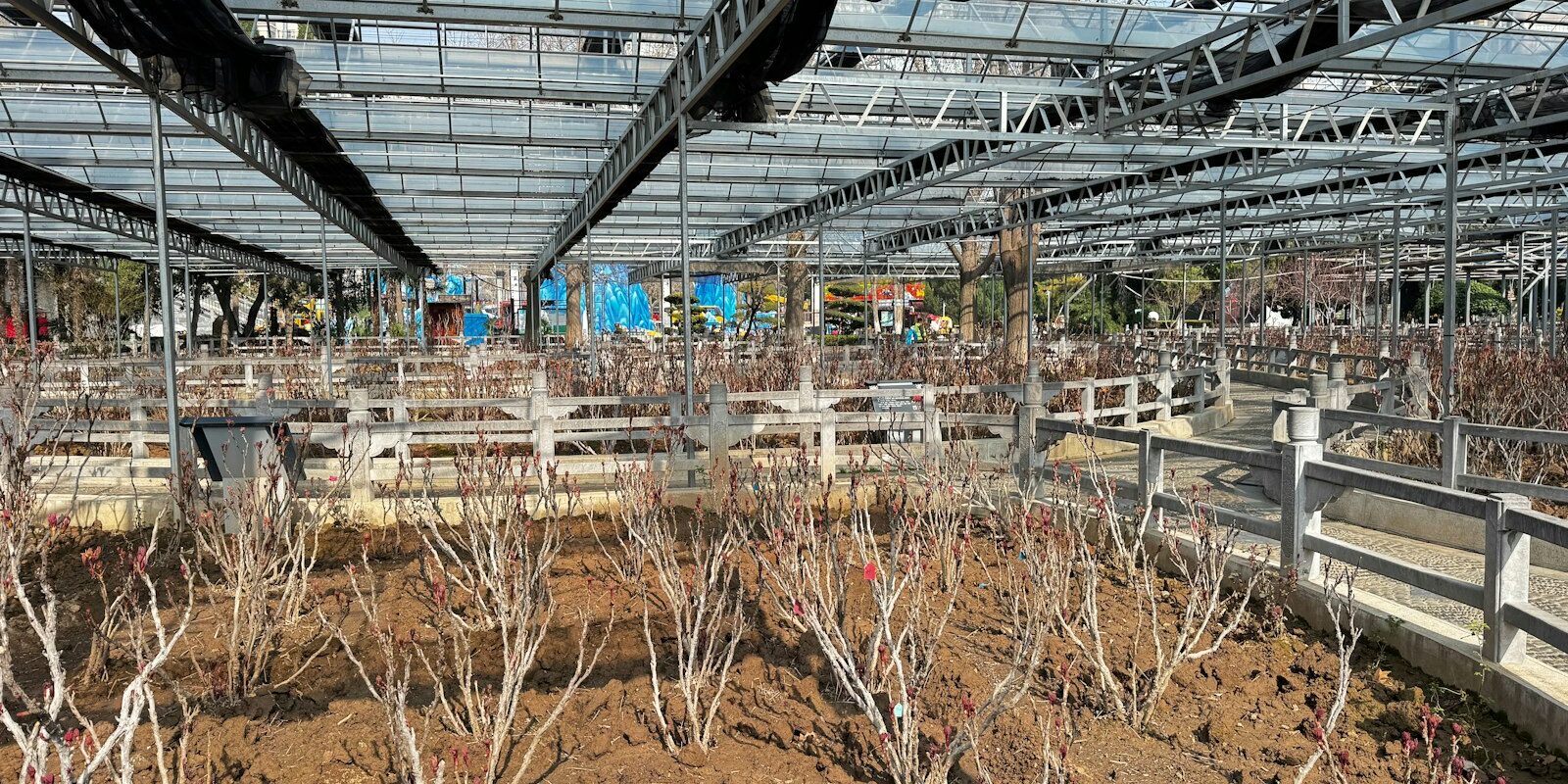
Kenya is one of the world’s largest exporters of cut flowers, and a substantial share of that industry is built on farms owned and run by Kenyan investors rather than multinational growers. Setting up a commercial flower farm for export in Kenya is not a single licence but a sequence of registrations spanning company law, land law, environmental regulation, water law, plant health rules, horticultural export licensing and labour law. A Kenyan investor does not face the constitutional restrictions on agricultural landholding that apply to foreign persons and companies, but every other layer of regulation applies in full. This guide sets out, in the order a local investor is likely to encounter them, the legal and regulatory steps involved in taking a flower farm from bare land to an operating export business.
Choosing a Business Structure and Registering the Company
Most serious flower export operations trade through a private limited company rather than as a sole proprietor, because buyers, banks and export regulators generally expect to deal with an incorporated entity with its own PIN, bank account and traceable ownership. Company registration is handled by the Business Registration Service (BRS) under the Companies Act, 2015, with the Registration of Business Names Act (Cap 499) available for a sole proprietorship or partnership and the Limited Liability Partnerships Act, 2011 for that structure instead. Incorporation is done online through the eCitizen platform, which BRS administers: the investor reserves a company name, then files incorporation documents including the memorandum and articles of association, particulars of directors and shareholders, and the registered office address, before the Registrar issues a Certificate of Incorporation. A private company needs at least one director and one shareholder, who may be the same person, and the 2015 Act prescribes no minimum share capital. Once incorporated, the company obtains a KRA PIN and, because it will be exporting, should register for VAT and later for the export documentation systems run by the Kenya Revenue Authority and Kenya Trade Network Agency (KenTrade). None of this differs from registering any other Kenyan company; the added complexity in this sector comes from the sector-specific regulators discussed below.
Securing and Confirming Rights Over Agricultural Land
A flower farm needs land with suitable agro-ecological conditions, reliable water, and proximity to Nairobi’s export infrastructure, most obviously Jomo Kenyatta International Airport. Because the investor here is Kenyan, the constitutional cap on foreign ownership of agricultural land does not apply, and the investor may acquire either freehold land or a leasehold interest, including a long lease of what was formerly government or trust land, on the same basis as any other citizen. What does apply, and is often overlooked, is the Land Control Act (Cap 302). Under section 6 of that Act, a “controlled transaction” in agricultural land situated outside a municipality or township, including a sale, transfer, lease, mortgage, exchange or partition, is void unless the relevant Land Control Board has given its consent. These boards are constituted at district level under the First Schedule to the Act, chaired by the county officer performing the functions of a former District Commissioner, with public officers and resident members, more than half of whom must be owners or occupiers of agricultural land in the area. Section 8 requires the application for consent to be made within six months of the agreement for the transaction, and a transaction completed without consent, or outside that window, does not pass title and cannot later be perfected without a fresh application or a court order extending time. An investor should build the Land Control Board consent step into the transaction timetable from the outset, alongside the usual title due diligence at the Land Registry, and should not release full purchase consideration or take possession on the strength of an unconsented sale agreement alone.
Environmental Impact Assessment Licensing (NEMA)
Commercial flower growing is capital and input intensive: greenhouses, boreholes or river abstraction works, chemical stores, cold rooms and, frequently, effluent from pesticide and fertiliser use. The Environmental Management and Co-ordination Act, 1999 (EMCA) requires that a project likely to have a significant effect on the environment must not be implemented unless an environmental impact assessment has been carried out and the National Environment Management Authority (NEMA) has issued an EIA licence. NEMA’s own guidance confirms that large-scale agriculture is among the categories of project listed for mandatory assessment, which in practice captures a commercial flower farm of any meaningful size, particularly one involving greenhouse construction, irrigation infrastructure and agrochemical use. Depending on the scale and sensitivity of the site, the investor’s appointed EIA expert, who must be a lead expert or firm registered with NEMA, will prepare either a project report for lower-risk elements of the development or a full EIA study report for the higher-risk categories, following scoping and NEMA’s approval of the terms of reference. The process includes a public participation component: the proponent must inform persons likely to be affected through means such as public notices and at least a minimum number of public meetings, and take their views into account before the report is submitted. NEMA charges a processing fee calculated as a percentage of total project cost, subject to a minimum, and issues the EIA licence subject to conditions typically covering chemical storage and handling, effluent and runoff management, and ongoing monitoring. Separately, EMCA prohibits water pollution and requires a licence from NEMA to discharge any effluent, which matters directly for a flower farm’s greenhouse wash-water and pesticide residues if these are not fully contained and reused on site. Operating without the EIA licence, or in breach of its conditions, exposes the company and its directors to enforcement action, including restoration orders and prosecution, and can undermine the farm’s standing with export certification bodies that ask to see evidence of environmental compliance.
Water Abstraction and Use Permits (Water Resources Authority)
Flowers for export are almost always grown under irrigation, whether drawn from a borehole, a river, a dam or a combination of sources, and water in Kenya is a public resource held in trust by the national government rather than something a landowner may take simply because it sits on or under their land. The Water Act, 2016 and the Water Resources Authority (WRA) regulate abstraction and use through a permitting system. An investor proposing to abstract water for irrigation or greenhouse use must apply to WRA with supporting hydrological or hydrogeological data, pay the prescribed application fee, and go through site verification and technical evaluation by the Authority’s regional technical committee before a permit is issued; for a borehole, this typically follows drilling authorisation and a driller’s completion report. WRA classifies water use into categories, with domestic and basic human needs given priority and permitted economic uses, including irrigation, charged according to volume abstracted. Abstraction permits are not perpetual: they run for a fixed term and require renewal every five years, and permit holders must install and maintain measuring devices, keep within the abstraction limits stated on the permit, and pay water use charges on time, failing which WRA can suspend, cancel or refuse to renew the permit, disconnect infrastructure, or prosecute unauthorised abstraction. Because water availability is often the single biggest constraint on where a flower farm can be sited, an investor should treat the WRA permit process, run in parallel with the NEMA EIA process, as a gating item to resolve before committing to greenhouse construction or planting.
Plant Health, Phytosanitary Compliance and Horticultural Export Licensing
Once the farm is producing, two further regulators control whether flowers can actually leave the country. The Kenya Plant Health Inspectorate Service (KEPHIS), operating under the Plant Protection Act (Cap 324) and the Agricultural Produce (Export) Act (Cap 319), handles phytosanitary certification, confirming that consignments meet the pest, disease and pesticide residue requirements of the destination market. KEPHIS inspectors carry out field inspections during the growing period to verify compliance with the phytosanitary requirements of the importing country and safe pesticide use, and inspect again at the point of export before issuing the phytosanitary certificate that must accompany each consignment. Separately, the Horticultural Crops Directorate (HCD), a directorate of the Agriculture and Food Authority established under the Agriculture and Food Authority Act, 2013, and the Crops (Horticultural Crops) Regulations, 2020 (Legal Notice No. 118 of 2020), licenses horticultural exporters. Under regulation 28 of those Regulations, an exporter applies using the prescribed form and must provide its certificate of incorporation, KRA PIN, business permit, directors’ identification, records showing traceability to contracted growers, and proof of a registered packing facility; the Authority then inspects the farm for good agricultural practice, the pack house for food safety, and the transport used, before issuing an export licence that expires on 30 June each year and must be renewed annually. Each shipment then requires a further export certificate under regulation 29, supported by the export licence and a KEPHIS-certified invoice recording the product, destination, consignee and consignment details. This registration and export licensing chain is often the most time-consuming part of setting up a new farm because it depends on the farm and pack house already meeting the required standard; an investor should plan for pre-export inspections to happen only once greenhouses, cold chain and pack house infrastructure are substantially complete. The documentation requirements themselves are covered in more depth elsewhere; this guide focuses on where they sit within the wider set-up process.
Labour Law Compliance for Farm and Casual Workers
Flower farms are labour intensive, particularly at harvest and grading stages, and rely heavily on casual and seasonal labour, which makes the Employment Act, 2007 a significant compliance area rather than an afterthought. Section 9 requires a contract of service for a period, or an aggregate number of working days, of three months or more to be in writing, and section 10 sets out what such a contract must state, including the employee’s particulars and remuneration rate. Casual employment has a specific conversion rule: under section 37, a casual employee who works an aggregate of not less than one month continuously is deemed employed on monthly terms from that point, and one who has worked continuously for two months or more is entitled to the terms and conditions of service that would have applied had they not been engaged casually at all. This provision regularly features in labour disputes on farms that roll short-term engagements without formalising staff once the statutory threshold is crossed. Beyond contracts, the Act entitles employees with twelve consecutive months of service to at least twenty-one working days of annual leave on full pay under section 28, and, after two months of service, to sick leave of at least seven days on full pay and a further seven days on half pay each year under section 30, with termination of monthly contracts requiring notice under section 35. Wages for agricultural employees are separately regulated under wage orders made under the Labour Institutions Act and periodically revised through the Regulation of Wages (Agricultural Industry) Order; an investor should check the current gazetted rates before setting pay scales, as these differ from, and are amended separately from, the general minimum wage order. Employers must also register with the National Social Security Fund and comply with Social Health Insurance Act deductions for every employee, and, under section 7 of the Work Injury Benefits Act, 2007, must obtain and maintain an insurance policy covering the employer’s liability to employees for injuries sustained in the course of employment, a requirement extending to casual workers engaged in the employer’s trade or business and carrying criminal penalties for non-compliance. Given the size of the workforce a commercial flower farm typically employs, getting these obligations right from the first hiring round is considerably cheaper than remedying them after a labour inspectorate visit or a tribunal claim.
Kenya Flower Council Standards and Market Access Certification
Meeting Kenya’s own regulatory requirements is necessary but not, in practice, sufficient to sell into the main export markets. The Kenya Flower Council (KFC), the industry’s voluntary self-regulatory body, operates the Flowers and Ornamentals Sustainability Standard and related certification schemes covering worker welfare, chemical handling and environmental management on member farms, and its certification body is also accredited to audit against GLOBALG.A.P.’s integrated farm assurance standard for flowers and ornamentals. Certification against these standards is not a Kenyan legal requirement in the way an EIA licence or an HCD export licence is, but most European buyers and auction houses will not take produce from an uncertified farm, which makes KFC and GLOBALG.A.P. certification a practical precondition for export sales even though it sits outside the statutory licensing chain. KFC maintains an approved list of plant protection products, evaluated for product safety, environmental impact and worker health and safety, which is a useful cross-check for a farm’s own chemical procurement, since the same substances also matter for KEPHIS residue checks and NEMA’s environmental conditions. An investor planning an export-oriented farm should budget for a certification audit, and for the record-keeping, block-level traceability and worker training that certification requires, as part of the initial compliance plan rather than as a later add-on.
How We Can Help
Clay & Associates Advocates advises Kenyan investors on the full legal set-up of agribusiness ventures, from company incorporation and land acquisition due diligence, including Land Control Board consent, through to environmental and water permitting, horticultural export licensing, and employment structuring for farm workforces. We work alongside your agronomists, EIA experts and certification auditors to keep the legal and regulatory workstream aligned with your construction and planting timetable. Contact our Regulatory Compliance team to discuss a proposed flower farm site, or our Real Estate team for agricultural land acquisition and Land Control Board consent, or our Corporate & Commercial team for company formation and export contracting. If your flower farm involves a foreign shareholder or expatriate management team, see our companion guide on setting up a flower farm in Kenya as a foreign investor.
Sources: Land Control Act (Cap 302), sections 2, 6 and 8, and the First Schedule; Environmental Management and Co-ordination Act, 1999, sections 58, 72 and 75; National Environment Management Authority, Environment Impact Assessment (EIA) services page; Water Act, 2016; Water Resources Authority, water use allocation and permitting page; Plant Protection Act (Cap 324) and Agricultural Produce (Export) Act (Cap 319), as summarised on the Kenya Plant Health Inspectorate Service, Phytosanitary Services page; Agriculture and Food Authority Act, 2013; Crops (Horticultural Crops) Regulations, 2020 (Legal Notice No. 118 of 2020), regulations 28 and 29; Employment Act, 2007, sections 9, 10, 28, 30, 35 and 37; Work Injury Benefits Act, 2007, section 7; Companies Act, 2015, as administered by the Business Registration Service, Companies Registry; Kenya Flower Council, certification body documents.
Frequently asked questions
Does a Kenyan investor face any restriction on owning agricultural land for a flower farm?
No. The constitutional restriction on non-citizens holding freehold land, and the cap on leasehold terms for non-citizens, apply to foreign investors, not to Kenyan citizens or wholly Kenyan-owned companies. A Kenyan investor may hold agricultural land freehold or leasehold on the same basis as for any other land, subject to the Land Control Act consent process described above.
Can I start building greenhouses before my NEMA EIA licence and WRA water permit are issued?
No. EMCA prohibits implementing a project likely to have a significant environmental effect before an EIA licence is issued, and the Water Act prohibits abstraction or construction of abstraction works before WRA has authorised them. Starting construction or abstraction beforehand exposes the project to stop orders, demolition of unauthorised works, and prosecution, and can also complicate later certification audits that ask for evidence of when permits were obtained relative to construction.
Is Kenya Flower Council or GLOBALG.A.P. certification a legal requirement?
No, it is a voluntary industry and buyer-driven standard rather than a statutory licence. However, most European importers and auction platforms will not buy from an uncertified farm, so in commercial terms it functions as a precondition for export sales even though it is separate from the HCD export licence and KEPHIS phytosanitary certificate that Kenyan law does require.
When does a casual worker on a flower farm become entitled to permanent staff terms?
Under section 37 of the Employment Act, a casual employee who works an aggregate of at least one month continuously is treated as employed on monthly terms from that point, and after two months of continuous engagement is entitled to the same terms and conditions of service as if they had not been engaged as a casual worker at all. Farms that roll casual engagements to avoid this conversion are exposed to claims for backdated benefits and unfair treatment.