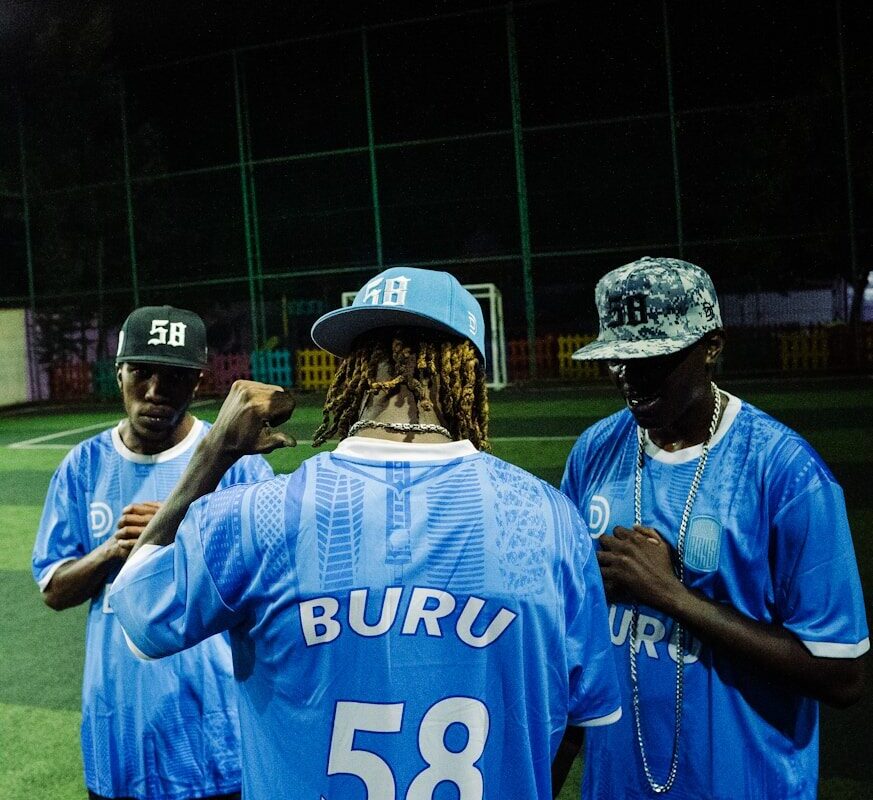
A football club’s badge, a federation’s mascot, a kit sponsor’s logo placement: these are commercial assets long before they are legal ones, and Kenyan clubs and sports federations increasingly monetise them through merchandising and sponsorship deals. But the value of a badge on a replica jersey or a brand name on a training kit depends entirely on someone actually owning the underlying intellectual property, and being able to license it on terms that hold up. Kenya has no sports-specific IP statute yet. Until one exists, clubs and federations rely on ordinary trademark, copyright, and contract law, and a surprising number get the basics wrong.
What Actually Protects a Club’s Brand Today
A club badge, team name, or federation logo can be registered as a trademark with the Kenya Industrial Property Institute (KIPI) under the Trade Marks Act, Cap. 506. Registration matters because it converts a design people recognise into a right the club can enforce and license. An unregistered badge is not without protection: Kenyan courts recognise the common law tort of passing off, allowing a club to stop a trader from marketing goods in a way that misleads the public into believing they are officially licensed. But passing off requires proving reputation and likely confusion in each case, which is slower and less certain than pointing to a registration certificate.
Kit designs, mascots, and promotional artwork are separately protected by copyright under the Copyright Act, which subsists automatically once an original work is fixed in material form, no registration required. The practical problem is ownership. Where a club commissions a freelance designer or an external agency to create a badge redesign or a mascot, copyright vests in the creator by default unless the commissioning contract assigns it in writing. Clubs that never formalised these commissions often discover, only when a merchandising dispute arises, that they do not actually own the artwork they have been selling on jerseys for years.
Licensing Merchandising and Sponsorship IP
Once ownership is settled, merchandising and sponsorship agreements are, legally, licensing agreements. If a club permits a manufacturer to print its badge on replica shirts, or a sponsor to display its logo across the club’s own marks and channels, the vehicle for that is a trademark licence. Kenyan trademark law formalises this through section 31 of the Trade Marks Act, which allows a licensee to be recorded on the register as a “registered user” of the mark. Recording a merchandise manufacturer or sponsor as a registered user is not mandatory for the licence to be valid between the parties, but it strengthens the club’s position if a third party infringes, and it gives the sponsor or manufacturer clearer standing to act against counterfeit merchandise itself.
Beyond the formal registration, the commercial terms carry most of the risk. A sponsorship or merchandising agreement should fix the scope of use (which marks, on which products, in which territory), quality control standards the club can enforce against the manufacturer, royalty or fee structure, exclusivity, term, and what happens to unsold stock and outstanding licensed goods on termination. Clubs that sign short, informal merchandising arrangements, common with local kit suppliers, frequently find they have no real mechanism to stop a supplier from continuing to produce and sell branded merchandise after the relationship ends.
Where the Draft Sports Bill, 2026 Would Change Things
A separate development worth tracking is the draft Sports Bill, 2026, a taskforce document prepared under the Ministry of Youth Affairs, Creative Economy and Sports that would, among other things, create a statutory right for athletes to control the commercial use of their own name, image, and likeness. As things stand, the Bill remains at the ministerial taskforce stage and has not been formally tabled before the National Assembly, so it does not yet change the legal position described above. It should not be confused with the separate Sports (Amendment) Bill, 2026, sponsored by Hon. Irene Mayaka, which addresses match manipulation and integrity offences and is currently before the National Assembly at the Committee of the Whole House stage; the two bills deal with entirely different subject matter despite the similar name. If the image-rights Sports Bill is eventually tabled and passed, it would sit alongside, not replace, the trademark and copyright framework clubs already rely on, since athlete image rights and club merchandising IP are legally distinct even where a sponsorship deal touches both.
How We Can Help
Clay & Associates Advocates advises clubs, federations, and sponsors on registering and licensing sports IP, drafting merchandising and sponsorship agreements, and clearing ownership of commissioned designs. Our guide to what the Sports Bill 2026 means for sponsorship, merchandising, and media rights contracts covers the pending legislative changes in more detail. Contact our Intellectual Property practice to discuss registering a badge, structuring a sponsorship deal, or resolving a merchandising dispute.
Sources: Trade Marks Act, Cap. 506, section 31 (registered users); Copyright Act, 2001; draft Sports Bill, 2026, Ministry of Youth Affairs, Creative Economy and Sports.
Frequently asked questions
Can a sports club trademark its own badge in Kenya?
Yes. A club badge, name, or mascot can be registered as a trademark with KIPI provided it is distinctive and not already registered by another party in the relevant class of goods and services.
What can a club do if an unlicensed vendor sells merchandise with its badge?
If the badge is registered, the club can bring a trademark infringement claim. If it is unregistered, the club can still act through the common law tort of passing off, though this requires proving reputation and likely public confusion.
Do individual athletes have separate rights over their own image?
Athlete image rights and club merchandising IP are legally distinct. Kenya does not currently have a statutory image-rights regime for athletes, though the draft Sports Bill, 2026 proposes one; in the meantime, athletes typically rely on contract terms in their playing or endorsement agreements.
Is the draft Sports Bill, 2026 already law?
No. It remains a ministerial taskforce draft that has not been tabled before the National Assembly, and should not be confused with the separate Sports (Amendment) Bill, 2026 on match-fixing, which is currently before Parliament.