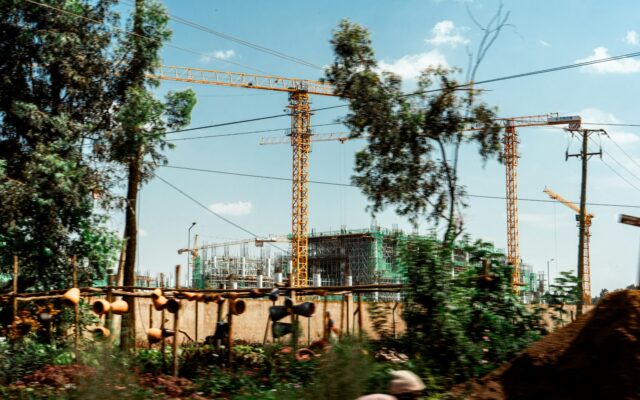
Apartments, maisonettes, office blocks and gated townhouse developments are now governed by a single, modern statute in Kenya: the Sectional Properties Act, 2020. For anyone buying a unit in a multi-unit development, or a developer structuring a new project, understanding how sectional titles work is essential before money changes hands. This guide explains the legal framework, the registration process, and what buyers and developers must check before relying on a sectional title.
What Is a Sectional Property?
A sectional property exists where a building has been divided into individual units, each owned separately by a different proprietor, while certain shared spaces such as corridors, stairwells, parking areas, and rooftops remain common property owned jointly by all unit owners. Section 3 of the Sectional Properties Act, 2020 defines a unit as a space situated within a building, described in a sectional plan by reference to floors, walls and ceilings, together with its proportionate share in the common property.
This structure is what allows someone to hold a separate, bankable title to a single apartment in a 20-storey block, rather than an undivided share in the whole building.
The Sectional Properties Act 2020: What Changed
The current Act repealed and replaced the original Sectional Properties Act of 1987, aligning the regime with the property law reforms introduced by the Constitution of Kenya 2010, the Land Act 2012, and the Land Registration Act 2012. The most significant changes were:
- A unified title system: every unit now receives its own certificate of title (for freehold) or certificate of lease (for leasehold), issued under the Land Registration Act, rather than relying on the older share certificate model.
- Mandatory geo-referencing of sectional plans, improving the accuracy of survey records.
- A statutory deadline for converting older long-term leasehold structures into proper sectional titles.
- A more detailed framework for the management corporation that runs the building after registration.
The Act applies to units developed on freehold land, or on leasehold land where the unexpired term is not less than twenty-one years and there is a clear intention to confer ownership on individual unit holders.
How a Sectional Plan Is Registered
The registration process generally follows these steps:
1. Building approval. The developer must first obtain county government approval for the building plan. 2. Sectional plan preparation. A licensed surveyor prepares the sectional plan from the approved building plan. The surveyor cannot proceed without proof of ownership of the parcel, typically the original title or certificate of lease. 3. County endorsement. The county government must certify that the proposed division of the building, as shown on the plan, matches what was approved. 4. Application to the Land Registry. The application for registration of the sectional plan is lodged together with an application to register the management corporation and a list of unit owners. 5. Closing the parent title. On registration, the Registrar closes the register for the original parcel and opens a separate register for every individual unit. 6. Issuing certificates. Each unit owner receives a certificate of title or certificate of lease, which also records their proportionate share in the common property.
Any existing charge or encumbrance on the original parent title is carried over and endorsed against every certificate issued for the individual units.
The Management Corporation
Registration of a sectional plan automatically brings into existence a management corporation, made up of all the unit owners. The corporation is a body capable of suing and being sued in its own name, and it is responsible for managing and maintaining the common property, collecting service charges, and enforcing the building’s by-laws. Owners should review the corporation’s by-laws carefully before purchase, since they govern everything from pet policies to how disputes between unit owners are resolved, including through an internal dispute resolution committee that the corporation may establish.
Converting Older Leasehold Structures
A significant practical issue for buyers of older apartment developments is conversion. Many apartment blocks built before 2020 were sold under long-term sub-leases rather than proper sectional titles. Section 13 of the Act, read together with section 54(5) of the Land Registration Act, requires these older sub-leases to be converted into sectional titles. Where conversion has not been completed, the law allows the Registrar to place a restriction on the parent title, blocking any further dealings, transfers, or new charges until the conversion is done.
This is one of the most important things a buyer’s advocate should check during due diligence: whether the development has fully converted to sectional titles, or whether it is still operating under an unconverted long-term lease structure that could complicate a future sale or mortgage.
What Buyers Should Check Before Purchase
Before committing to purchase a unit in any sectional development, a thorough property due diligence exercise should confirm:
- That the sectional plan has actually been registered, not merely approved or pending
- The unit’s individual certificate of title or lease, separate from the parent title
- Whether the development has completed conversion from any older leasehold structure
- The management corporation’s by-laws, service charge obligations, and financial standing
- Any existing charges or restrictions endorsed against the unit
This due diligence sits alongside the broader checks any buyer should carry out when buying property in Kenya, including verifying the seller’s title and confirming there are no competing claims or unresolved disputes over the parcel.
Stamp Duty on Sectional Units
A common question from unit owners going through the conversion process is whether they will be charged stamp duty twice: once on the original sub-lease, and again when that sub-lease is converted into a sectional title. The position under the Act is that owners are not required to pay additional stamp duty on conversion if stamp duty was already paid when the original sub-lease was registered. Stamp duty only becomes payable on conversion where it was not paid at the earlier stage, which is sometimes the case with informal or older transactions. Anyone uncertain about their stamp duty position should obtain a written confirmation from the relevant land registry before completing a conversion application, since this affects both timing and cost.
Resolving Disputes Between Unit Owners
Disputes are common in multi-unit developments, whether over unpaid service charges, unauthorised alterations to a unit, disagreements over common property use, or disputes between the corporation and an individual owner. The Act allows a management corporation to establish an Internal Dispute Resolution Committee specifically to handle these disagreements without resorting immediately to litigation. Where internal resolution fails, disputes over sectional property fall within the jurisdiction of the Environment and Land Court, given that they concern interests in land.
Buyers should also be aware that the corporation has statutory powers to penalise non-compliance. For example, where an institutional manager fails to provide requested financial information to an owner within the specified period, the corporation may seek an order imposing a penalty against that manager for each day of continued non-compliance. This is a meaningful protection for owners who often have limited visibility into how shared funds are managed.
Tenanted Units and Sectional Plans
Developers and owners selling units that are already occupied by tenants face a specific restriction under the Act. Where a building contains premises let to a tenant who is not party to the purchase agreement and not included in the sectional plan, the owner is prohibited from selling those premises to a buyer until the sectional plan covering them has been properly registered. This protects both incoming buyers, who need certainty over what they are purchasing, and existing tenants, who must be given proper notice before any change affecting their tenancy. Where an owner needs to terminate sectional status entirely, written notice must be given to the corporation, and a 90-day waiting period applies before termination can proceed, allowing other owners the opportunity to object.
Common Pitfalls in Sectional Property Transactions
Several recurring problems arise in sectional property deals in Kenya, and a buyer’s advocate should be alert to each of them:
- Buying off-plan without registered sectional status. Many developments are sold to buyers before the sectional plan has actually been registered. In these cases, the buyer initially holds only a contractual right to a future unit, not a registered title. The sale and purchase agreement should clearly set out the developer’s obligation to complete registration within a defined timeframe.
- Unconverted long-term leases. As discussed above, older developments that have not converted their leasehold structures into sectional titles carry the risk of a registry restriction blocking future transfers.
- Unclear common property allocation. The unit factor, which determines an owner’s proportionate share in the common property and their voting weight in corporation decisions, should be clearly stated and verified against the registered sectional plan.
- Outstanding service charge arrears. Arrears attached to a unit can sometimes follow the property rather than the seller personally, so a buyer should request a clearance certificate or statement of account from the corporation before completing the purchase.
- Encumbrances carried over from the parent title. Because charges on the original parcel are endorsed against every unit certificate on registration, a buyer must check not just the individual unit’s register but understand what encumbrances existed on the parent title before subdivision.
How We Can Help
Clay & Associates Advocates advises both developers structuring new sectional developments and individual buyers purchasing apartments, offices, and townhouses. Our work includes reviewing sectional plans and corporation documents, conducting title and conversion due diligence, and acting on conveyancing for sectional unit purchases. If you are buying into a sectional development, or developing one, speak to our property and real estate team before signing any agreement.
For the full text of the governing law, see the Sectional Properties Act, 2020 on the Kenya Law website, and the implementing Sectional Properties Regulations, 2021, which set out the detailed registration forms and procedures.