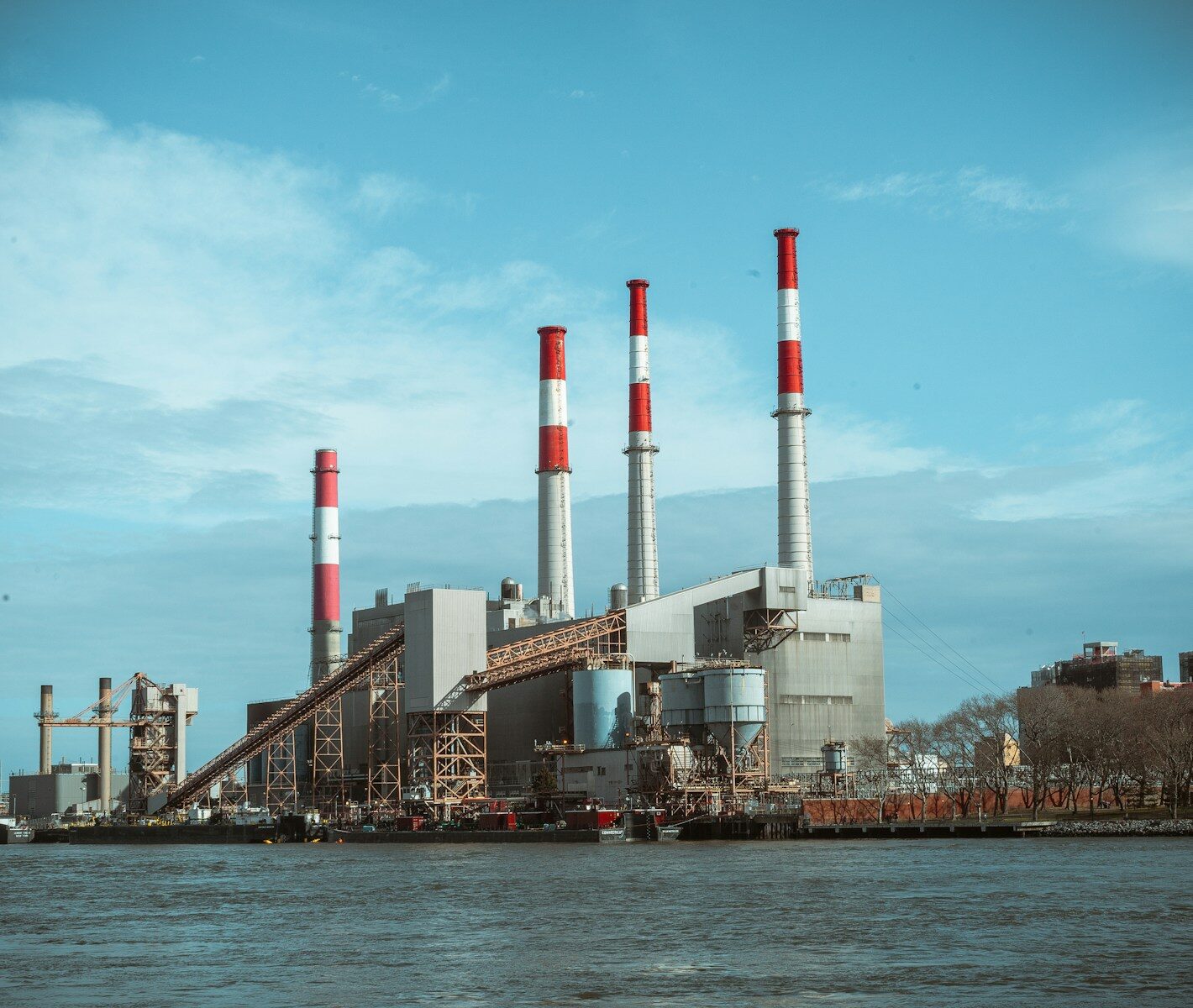
Environmental compliance for manufacturers in Kenya is administered by the National Environment Management Authority (NEMA) under the Environmental Management and Co-ordination Act (EMCA) No. 8 of 1999, and a manufacturing facility’s relationship with NEMA does not end once an initial approval is granted. Failure to comply at any stage, before construction, during operation, or in waste handling after a product reaches end of life, can result in facility closure, criminal prosecution, and remediation liability that often exceeds the regulatory fine itself.
Environmental Compliance for Manufacturers in Kenya: The Impact Assessment Stage
Manufacturing facilities listed in the Second Schedule of the EMCA require an Environmental Impact Assessment licence before commencement. The EIA process involves preparing a project report, conducting a full EIA study by a NEMA-licensed expert for larger projects, public participation, and NEMA approval. No construction or operation can commence on a project requiring an EIA until NEMA issues a licence, and a facility that proceeds without one is not merely risking a future penalty but operating an entirely unlicensed project from day one. Carrying out a project requiring an EIA without the requisite licence is itself an offence under the Act, carrying imprisonment of up to two years or a fine of up to five million shillings, or both, with the added consequence that any existing related licence the operator holds can be revoked as part of the same conviction. A facility that later changes its production process, expands capacity, or alters its effluent or emissions profile should also check whether that change itself requires an amended EIA licence, since an approval granted for one configuration of a facility does not automatically extend to a materially different one.
Environmental Audit and Monitoring
Facilities with NEMA approval are subject to periodic environmental audits conducted by NEMA-licensed auditors, with self-monitoring and audit frequency typically set as a condition of the original EIA licence rather than a fixed annual default that applies uniformly to every facility. Non-compliance identified in an audit must be remedied within NEMA-set timelines, and a facility that treats an audit finding as advisory rather than a binding compliance deadline risks the same enforcement consequences as a facility that never sought an EIA licence at all. Maintaining the audit and self-monitoring schedule as a standing item on the facility’s compliance calendar, rather than something that gets attention only once NEMA sends a reminder, is the more reliable way to avoid that exposure.
Effluent and Emissions Standards
The Water Quality Regulations, 2006 set standards for trade effluent discharged to public sewers, watercourses, or land. The Air Quality Regulations, 2014 made under the EMCA set emission standards for industrial plants. Monitoring, record keeping, and reporting obligations apply under both sets of regulations, and a facility’s discharge or emissions data is exactly the kind of record a NEMA audit will ask to see first, so it needs to be maintained as a routine operational practice rather than compiled retroactively once an inspection has already been scheduled. A facility that outsources effluent treatment or emissions monitoring to a contractor remains the party responsible for compliance under the Act, so the underlying contract should make clear who is obligated to produce records on demand and within what timeframe, and should not leave the facility exposed simply because the contractor failed to deliver a report on time.
Waste Management and Extended Producer Responsibility
The Waste Management Regulations, 2006 require responsible management of industrial waste. The Sustainable Waste Management Act, 2022 introduced a more recent and more demanding obligation on top of this: certain manufacturers and importers must take responsibility for end-of-life product management under the Extended Producer Responsibility (EPR) framework, which shifts part of the waste management burden for a product’s eventual disposal back onto the manufacturer or importer that placed it on the market in the first place, rather than treating waste management as solely a downstream municipal or county responsibility. A manufacturer bringing a new product category to market should check whether it falls within the EPR framework’s scope before launch, since this is a comparatively recent obligation that an older compliance checklist focused only on the 2006 Waste Management Regulations would not capture, and the practical compliance route for many manufacturers is participation in an accredited Producer Responsibility Organisation rather than building an individual end-of-life collection system from scratch.
NEMA’s Enforcement Powers
NEMA’s enforcement officers have statutory powers of entry, inspection, and seizure that operate independently of the criminal process: an officer can enter a facility, inspect records and equipment, and issue an improvement order or an environmental restoration order requiring specific remedial steps within a set timeframe, separate from and in addition to any prosecution that may follow. A facility’s response to an improvement order is itself an action point with a deadline, not a notice to be filed away pending legal advice; failing to comply with the order is a separate basis for enforcement action even where the underlying environmental issue is eventually resolved. Licences issued under the EMCA framework are also not indefinite: EIA licence conditions, audit frequency, and reporting obligations should be reviewed periodically against current NEMA requirements, since regulations made under the Act, including the Water Quality and Air Quality Regulations, can be amended without requiring a fresh Act of Parliament, and a facility’s existing licence does not automatically update itself to reflect a later regulatory change.
Penalties
Penalty amounts under the EMCA vary by the specific offence rather than sitting at one flat figure across the Act. Section 144’s general penalty, applicable where no other penalty is specifically provided for a contravention, carries imprisonment of between one and four years or a fine of between two million and four million shillings. Specific offences carry their own penalty bands set elsewhere in the Act, including the up to five million shilling fine and licence revocation for proceeding without a required EIA licence noted above, and other provisions carry fines as low as one million shillings depending on the conduct involved; a compliance assessment should check the penalty attached to the specific provision actually at issue rather than rely on a single number assumed to apply across every kind of EMCA violation. Directors can be held personally liable for an offence committed by a company where it is proved to have been committed with their consent, connivance, or neglect, and civil liability for environmental damage, including clean-up and remediation costs, can significantly exceed whatever the regulatory fine itself amounts to.
Clay & Associates Advocates advises manufacturers on NEMA licensing, environmental audit compliance, effluent and emissions obligations, and Extended Producer Responsibility requirements under the Sustainable Waste Management Act. If your facility is planning a new project requiring an EIA, responding to an audit finding, an improvement order, or a restoration order, or assessing whether a new product line triggers EPR obligations, we can help you work through the current requirements and respond to NEMA correspondence before a compliance gap becomes an enforcement matter.
Ensuring your manufacturing operation meets NEMA’s environmental requirements? Contact Clay & Associates Advocates. Book a Consultation
Related reading: Manufacturing Licences in Kenya | KEBS Standards Compliance
For tailored legal advice on this matter, speak with our manufacturing sector legal services team at Clay & Associates Advocates. We advise businesses and individuals across Kenya on Manufacturing matters from our offices at Nextgen Mall, Nairobi. | Export Licensing in Kenya